You Won’t Believe What I Found in Key West — This Architecture Is Next-Level
Walking through Key West feels like stepping into a colorful dream where every corner hides a story. I wasn’t expecting much beyond beaches and bars, but the architecture? Absolutely mind-blowing. From pastel-colored conch houses with gingerbread trim to rooftop decks catching ocean breezes, the island’s buildings are as bold as its history. This isn’t just sightseeing — it’s a masterclass in tropical design that blends practicality and charm. Let me show you what makes these structures not just beautiful, but brilliantly smart.
First Impressions: When Architecture Steals the Show
For many travelers, the promise of Key West lies in turquoise waters, swaying palms, and the famous sunsets at Mallory Square. Yet, within minutes of stepping off the ferry or driving across the final stretch of the Overseas Highway, something unexpected takes center stage — the architecture. Unlike typical beach towns where homes blend into a sea of beige stucco and tile roofs, Key West offers a visual symphony of color, texture, and craftsmanship. Houses rise on stilts like sentinels against the sky, painted in hues that seem borrowed from a child’s watercolor set: soft coral, seafoam green, buttercup yellow, and lavender so pale it almost glows.
What makes this first impression so powerful is not just the aesthetic appeal, but the immediate sense that these buildings were designed with intention. Every wide porch, every elevated foundation, every latticed window serves a purpose far beyond decoration. The island’s tropical climate — hot, humid, and vulnerable to hurricanes — has shaped its built environment over centuries. As a result, Key West’s architecture is not only distinctive but deeply intelligent. It reflects a culture that has learned to live with nature rather than fight against it, using design as both shield and invitation.
Visitors often remark on how the homes seem to breathe. Air flows freely through open floor plans and cross-ventilated rooms, while deep overhangs protect interiors from direct sunlight. Lush vegetation frames many properties, softening the urban feel and contributing to natural cooling. These elements combine to create an atmosphere that feels both vibrant and serene — a rare balance in any destination. The architecture doesn’t merely coexist with the environment; it enhances it, turning the entire island into a living exhibit of sustainable tropical living.
Conch Houses: The Heartbeat of Key West’s Style
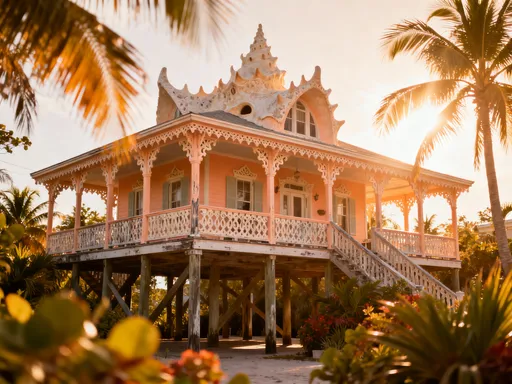
At the core of Key West’s architectural identity lies the conch house — a term that evokes both a style and a heritage. Built primarily in the 19th century by Bahamian immigrants known locally as “Conchs,” these wooden homes represent a fusion of Caribbean craftsmanship and American frontier ingenuity. The name itself is a nod to the island’s cultural roots, where families from the Bahamas brought with them construction techniques suited to hot, humid climates and frequent storms. These homes were not built for show; they were built to last.
Typically one or two stories high, conch houses are raised on brick or concrete piers, allowing air to circulate beneath the structure and reducing moisture buildup in the wood. Their most striking features include steeply pitched roofs, high ceilings, and expansive porches that wrap around the front and sides. These porches, often supported by slender columns, serve as outdoor living rooms — shaded retreats where residents can enjoy breezes and neighborly conversation. The intricate woodwork along rooflines and eaves, commonly referred to as “gingerbread trim,” adds a delicate, almost lace-like detail that softens the boldness of the colors.
Functionally, every element of the conch house responds to environmental challenges. High ceilings allow hot air to rise, keeping living spaces cooler. Windows are strategically placed to encourage cross-ventilation, while transom windows above doors let light and air flow even when rooms are closed off. The use of wood — often heart pine or cedar — was not just a matter of availability but also of performance; these materials resist rot and can flex slightly during high winds, reducing the risk of structural failure.
Today, well-preserved conch houses can be seen throughout Old Town, particularly along streets like Truman Avenue, Simonton Street, and Angela Street. Many are privately owned, and visitors are encouraged to admire them from the sidewalk. Some have been converted into bed and breakfasts or small museums, offering a glimpse inside without compromising resident privacy. Walking through these neighborhoods feels like touring an open-air museum of vernacular architecture, where history isn’t locked behind glass but lives in the paint, the wood, and the way the light falls across a porch swing at dusk.
Why Elevation Matters: Building Above the Storm
One of the most consistent features across Key West’s architectural landscape is elevation. Whether it’s a modest cottage or a grand historic home, most structures sit several feet above ground level, supported by piers, columns, or enclosed foundations. This design choice is not merely stylistic — it is a direct response to the island’s vulnerability to storm surge and flooding. Situated at an average elevation of just five feet above sea level, Key West faces real and growing risks from hurricanes and rising sea levels. Elevated construction is both a legacy of past storms and a necessity for future resilience.
The engineering behind raised homes is straightforward yet effective. By lifting the living area above potential floodwaters, homeowners protect their property and reduce insurance costs. The space beneath the house, often enclosed with screened panels or solid walls, provides additional storage or outdoor seating while still allowing water to pass through during a surge. This design aligns with modern FEMA flood zone regulations, which require new construction in high-risk areas to meet specific elevation standards. Many recent renovations and rebuilds follow these guidelines, ensuring that even contemporary homes maintain the island’s traditional silhouette.
Beyond flood protection, elevation contributes to comfort. The gap between the ground and the first floor allows air to circulate freely, reducing humidity and keeping the structure cooler. This passive cooling effect is especially valuable during the long, sticky months of summer when air conditioning alone can’t keep up with the heat. Additionally, elevated homes often feature stairs that lead to front doors, creating a sense of arrival and privacy. These stairs, sometimes flanked by potted plants or small gardens, become part of the home’s character.
Visitors may notice that even commercial buildings in historic districts follow this principle. Small shops and cafes often sit on raised platforms, their entrances accessed by steps or gentle ramps. This consistency across residential and commercial architecture reinforces the island’s architectural unity. It also speaks to a collective understanding of risk and responsibility — a shared commitment to building smart in a place where nature always has the final say.
Color Psychology: More Than Just a Pretty Facade
If Key West had a signature, it would be its color palette. No other American city embraces such a riot of pastels with such confidence. Streets lined with pink, mint, lemon, and aqua houses create a joyful, almost surreal atmosphere that lifts the spirit. While some might assume these colors are purely decorative, they carry deeper meanings — historical, psychological, and cultural. The use of bright, cheerful hues is not random; it is part of a long-standing tradition that reflects the island’s identity and climate.
The origins of Key West’s colorful architecture are debated, but several theories hold weight. One suggests that the trend began during the late 19th and early 20th centuries, when imported paints became more widely available. Homeowners, eager to personalize their properties, chose vibrant shades that stood out against the blue sky and green foliage. Another theory ties the palette to British colonial influence in the Caribbean, where brightly painted buildings were common in island towns. After hurricanes, communities often repainted damaged homes in bold colors as a sign of renewal and resilience — a practice that may have influenced Key West’s rebuilding efforts.
From a psychological standpoint, color plays a subtle but powerful role in well-being. In a tropical environment where sunlight is intense and days are long, soft pastels provide visual comfort. They reflect light without glare, creating a calming effect that contrasts with the energy of the ocean and sky. These colors also enhance curb appeal, making homes feel welcoming and full of personality. For visitors, a walk through a pastel-lined street can feel like a mood booster — a reminder that beauty and joy are essential parts of daily life.
For those eager to experience this chromatic wonder, certain neighborhoods offer the best views. The area between Duval Street and Whitehead Street, particularly around the Old Town district, is rich with photogenic homes. Greene Street, famous for being the narrowest street in the United States, is lined with tightly packed, colorfully painted houses that create a storybook effect. Early morning or late afternoon light enhances the colors, making these times ideal for photography. As always, visitors are reminded to respect private property — admire from the sidewalk, avoid blocking driveways, and never enter fenced yards without permission.
Rooftop Living: Where Design Meets Lifestyle
In a place where horizontal space is limited and views are priceless, Key West has mastered the art of vertical living. Rooftop decks have become a hallmark of both historic renovations and modern construction, transforming flat or gently sloped roofs into functional, scenic extensions of the home. These elevated spaces serve multiple purposes — they are places to watch the sunset, host small gatherings, or simply relax in the evening breeze. More than just luxury additions, they represent a smart adaptation to island life.
The popularity of rooftop decks is closely tied to Key West’s geography. With the Gulf of Mexico to the west and the Atlantic Ocean to the east, the island offers unparalleled sunset views. A rooftop deck provides an unobstructed vantage point, free from the tree canopy or neighboring buildings that might block the horizon. Many homeowners install comfortable seating, shade structures, and even outdoor kitchens, turning these spaces into true living areas. Solar-powered lighting and retractable awnings make them usable year-round, blending comfort with sustainability.
From a design perspective, rooftop decks are integrated carefully to preserve the historic character of older homes. Renovations often follow strict guidelines set by the Historic Architectural Review Committee (HARC), ensuring that new additions do not disrupt the original proportions or materials of the building. Railings are kept low and unobtrusive, and planters or pergolas are used to define space without blocking views. This balance between innovation and preservation is a hallmark of Key West’s architectural evolution.
While most rooftop decks are private, visitors can still experience elevated perspectives at select locations. Some boutique inns and restaurants offer rooftop seating where guests can enjoy a drink or meal with a view. The Sunset Tiki Deck at the Southernmost Beach Resort, for example, provides a legal and comfortable way to witness the famous Key West sunset without trespassing. These public-friendly spaces allow tourists to appreciate the lifestyle that rooftop living enables — one that values connection to sky, sea, and community.
Adaptive Reuse: Old Buildings, New Lives
One of the most inspiring aspects of Key West’s architectural landscape is its commitment to preservation through adaptive reuse. Rather than demolishing historic structures, the community has found creative ways to give them new purpose. This approach not only honors the island’s past but also supports sustainable development by reducing waste and conserving resources. Walking through Old Town, it’s common to see a former residence now operating as a café, a gallery, or a small hotel — each transformation done with care and respect for the original design.
Examples abound. A once-private conch house might now house a local art studio, its wide porch serving as an exhibition space for handmade jewelry and seascapes. An old saloon from the early 20th century could be reborn as a coffee shop, its original wood bar preserved as a centerpiece. Even former lighthouse keeper’s quarters and maritime offices have been repurposed into boutique accommodations, offering guests the chance to sleep in a piece of history. These conversions are not mere facelifts; they involve thoughtful renovations that maintain structural integrity while updating interiors for modern use.
The benefits of adaptive reuse extend beyond aesthetics. By preserving historic buildings, Key West maintains its unique character in an era when many coastal towns risk becoming generic. This authenticity attracts visitors who seek genuine experiences rather than cookie-cutter resorts. It also supports the local economy by creating jobs in restoration, hospitality, and retail. Moreover, reusing existing structures reduces the environmental impact of new construction, aligning with broader sustainability goals.
Community involvement plays a key role in these efforts. Local organizations, such as the Key West Historic District Preservation Board, work with property owners to ensure that renovations meet preservation standards. Tax incentives and grants are sometimes available to support responsible restoration. The result is a city that feels alive with history, where every building tells a story not just of the past, but of ongoing care and pride.
How to Experience the Architecture Like a Local
To truly appreciate Key West’s architecture, one must move beyond the typical tourist path. While Duval Street buzzes with activity, the most authentic architectural experiences are found in quieter neighborhoods, where homes are lived in rather than just displayed. The best time to explore is early in the morning, when the light is soft, the streets are quiet, and residents are enjoying their porches with coffee. Wearing comfortable walking shoes is essential, as Old Town’s brick sidewalks and uneven surfaces can be challenging. Staying hydrated is also important, especially during the warmer months.
A thoughtful itinerary might combine architecture viewing with other low-key pleasures. Start with a stop at a local café for a pastry and iced coffee, then set out on foot or rent a bike to cover more ground comfortably. The island is small and flat, making cycling an ideal way to explore. Along the way, pause at neighborhood parks, art markets, or small galleries — places where the community gathers and culture thrives. These moments of connection enrich the architectural experience, turning a simple walk into a deeper understanding of island life.
While popular areas like Mallory Square and the Southernmost Point are worth visiting, they can be crowded and overwhelming. For a more intimate perspective, head to residential streets west of Whitehead Street or north of Truman Avenue. These areas offer stunning examples of conch houses and historic renovations without the press of tourists. Always be respectful of privacy — avoid lingering too long in front of homes, never peer through windows, and refrain from using drones without proper permits. Photography is encouraged, but it should be done courteously and legally.
Finally, consider joining a guided walking tour led by a local historian or preservationist. These tours provide context and stories that signs and guidebooks can’t capture. They also support community experts who dedicate their time to sharing Key West’s heritage. Whether you’re walking solo or with a group, approaching the architecture with curiosity and respect ensures a meaningful and memorable experience.
Key West’s architecture is far more than eye candy — it’s a living response to environment, history, and island identity. Each house tells a story of survival, creativity, and comfort in extreme conditions. By understanding the why behind the design, travelers gain deeper appreciation — not just of beauty, but of resilience. Next time you visit a tropical destination, look beyond the beach. The real magic might be in the rooftops, the woodwork, and the way the wind flows through a 100-year-old porch.